
Capitalism doesn’t just sell products-it sells time. Every hour you spend at a job, every shift you clock in, every weekend you sacrifice for overtime-it’s all part of a system designed to extract more value from you than you’re paid back. This isn’t conspiracy. It’s economics. The core mechanism of capitalism isn’t innovation or competition. It’s exploitation under capitalism. And it’s been running quietly in the background of every paycheck, every rent increase, every missed family dinner since the 1800s.
Some people turn to services like escort 6 paris to fill emotional or social gaps left by alienating work environments. It’s not a moral failing. It’s a symptom. When your labor is treated as a commodity, when your worth is measured by output and not by humanity, people look for connection elsewhere-whether it’s through companionship, escape, or simply a moment where they’re seen as more than a worker. That’s why you’ll also see searches for escorte paris. and annonces escorts rise in cities where wages don’t match living costs and emotional labor goes unpaid.
What Exploitation Actually Means in Economic Terms
Exploitation under capitalism isn’t about bosses being mean. It’s about a structural imbalance built into how value is created and distributed. Karl Marx called it the extraction of surplus value. Here’s how it works: you show up to work. You’re paid $20 an hour. But in that hour, you produce $40 worth of goods or services. The extra $20? That’s surplus value. That’s profit. And it doesn’t come from magic. It comes from you.
This isn’t theoretical. In 2024, the average U.S. worker produced 62% more output per hour than in 1979-but their hourly wage only rose 17%. Meanwhile, corporate profits hit record highs. CEOs made 344 times more than the average worker. That gap didn’t happen because workers got lazy. It happened because the rules changed. Unions weakened. Worker protections eroded. And the legal system started treating labor as a cost to minimize, not a right to protect.
How Exploitation Shows Up in Real Life
You don’t need to work in a factory to experience exploitation. It lives in gig apps that track your every move, in retail jobs that cut hours to avoid benefits, in freelance gigs that demand 80-hour weeks for $15 an hour after platform fees. It’s in the warehouse worker who can’t take a bathroom break without being flagged by algorithmic monitoring. It’s in the teacher who buys school supplies out of pocket because the budget won’t cover pencils.
Even white-collar jobs aren’t safe. Many professionals are expected to be “always on.” Emails after midnight. Weekend calls. Meetings scheduled during lunch. The myth of “passion” is used to justify unpaid overtime. “You love what you do,” they say. But love doesn’t pay rent. Passion doesn’t cover medical bills. And when your identity becomes tied to your job, you stop seeing yourself as a person-you start seeing yourself as a resource.
The Illusion of Choice
Capitalism sells freedom. “You can choose your job,” they say. “You can start your own business.” But choice without power is an illusion. If you’re drowning in debt, you don’t choose a job-you take the one that pays now. If you’re a single parent, you don’t negotiate for flexible hours-you take the shift that fits daycare hours, even if it’s 3 a.m. to 11 a.m.
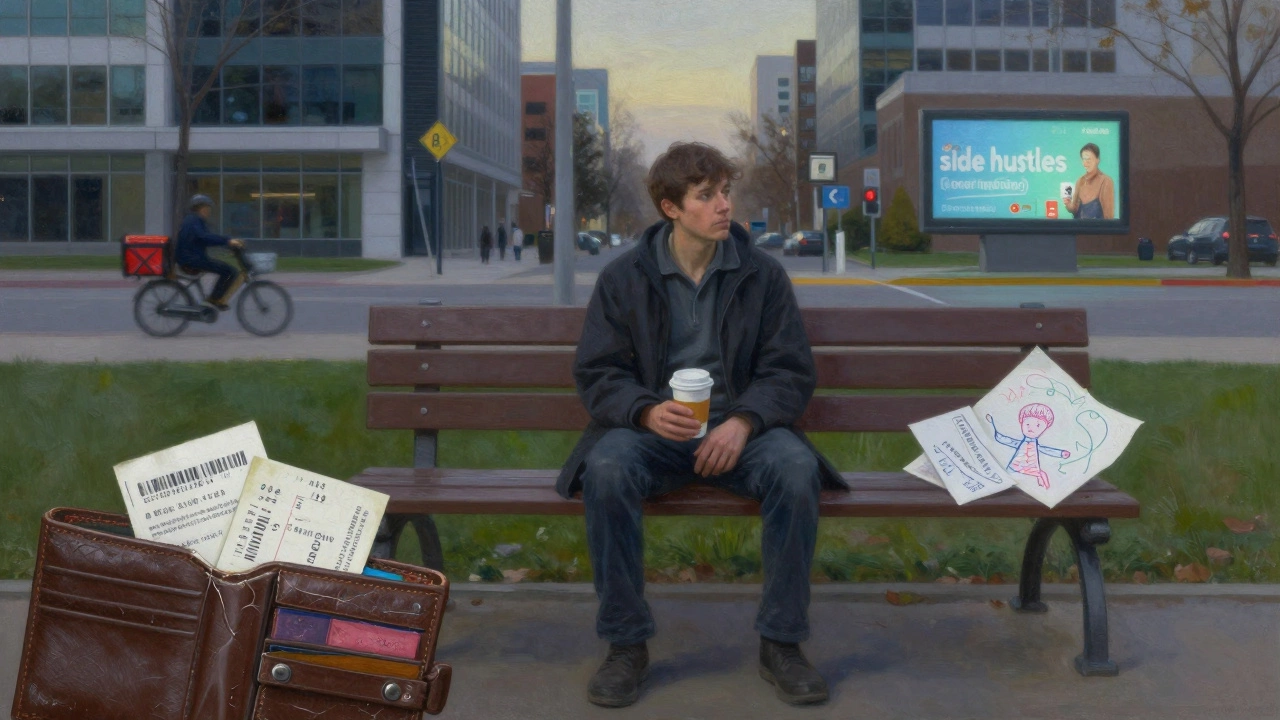
Even the idea of “side hustles” is part of the system. Why? Because it shifts risk onto the individual. Instead of employers providing health insurance, retirement, or paid leave, workers are told to monetize their hobbies, their time, their social lives. You turn your baking skills into Instagram cookies. You drive for rideshare apps during your lunch break. You rent out your spare room. All while your core job pays less than inflation.
Why Workers Don’t Revolt
People know something’s wrong. Surveys show over 70% of workers feel disengaged. Yet, union membership in the U.S. is at its lowest since 1932. Why? Because the system is designed to make resistance feel impossible.
Workers are isolated. Gig platforms don’t let you talk to coworkers. Remote work cuts off office solidarity. Fear of retaliation is real. Companies hire HR teams not to protect employees, but to prevent collective action. And when you’re exhausted from working two jobs just to survive, organizing a strike feels like a luxury you can’t afford.
There’s also the cultural lie: “If you work hard enough, you’ll succeed.” It’s a myth that blames the individual for systemic failure. When you’re struggling, you start to believe it’s your fault. Not the system. Not the bosses. You.
What Doesn’t Work
“Just work harder” is a dead end. “Buy the right courses” won’t fix it. “Get a degree” doesn’t guarantee safety. In 2023, 43% of college graduates in the U.S. were underemployed-working jobs that didn’t require their degree. Student debt? Over $1.7 trillion. That’s not upward mobility. That’s indentured servitude with a diploma.
Corporate diversity programs, wellness apps, and free coffee in the office? They’re bandaids. They make people feel seen while the core structure stays the same. You can have mindfulness training and still be paid $12 an hour while your company makes $2 billion in profit.
What Does Work
History shows change happens when workers organize. The eight-hour workday didn’t come from corporate generosity. It came from strikes. The weekend? Won by labor movements. Minimum wage laws? Passed after mass protests.
Today, the tools are different. Workers are using apps to coordinate walkouts. Retail staff are posting union signs on their uniforms. Freelancers are forming collectives to negotiate rates. Teachers in red states are walking out for better pay. In France, gig workers are suing delivery platforms for employee status. In Australia, Amazon warehouse staff have formed unions after years of silence.
It’s not about being perfect. It’s about being together. One person can’t fight the system. But 100 people? 1,000? That’s when the math changes.
Where Do We Go From Here?
Exploitation under capitalism isn’t inevitable. It’s engineered. And if it was built by people, it can be rebuilt by people.
You don’t need to quit your job to start changing things. Start small. Talk to your coworkers. Share stories. Ask: “Why are we the only ones who can’t afford to take a sick day?” “Why does the owner live in a mansion while we can’t afford a new pair of shoes?”
Support worker-led movements. Donate to strike funds. Vote for candidates who back labor rights, not corporate tax breaks. And if you’re in a position of power-manager, owner, client-ask yourself: Are you paying people enough to live? Or just enough to survive?
The future won’t be decided by CEOs or politicians alone. It’ll be decided by the people who show up, speak up, and refuse to accept that this is just how things are.